
Keeping jewelry records organized helps you identify valuable possessions, locate supporting documents, and prepare for insurance documentation requests. However, purchase receipts, photographs, gemstone certificates, and appraisal reports can easily become scattered across filing cabinets, email accounts, and digital folders.
Creating a centralized jewelry inventory provides a practical way to keep these records together. Whether you own diamond rings, gold necklaces, luxury watches, or family heirlooms, a consistent recordkeeping system helps you maintain a clear history of your collection.
For jewelry owners in Hawaii, organizing these records is a useful step toward managing personal property documentation and preparing for insurance reviews.
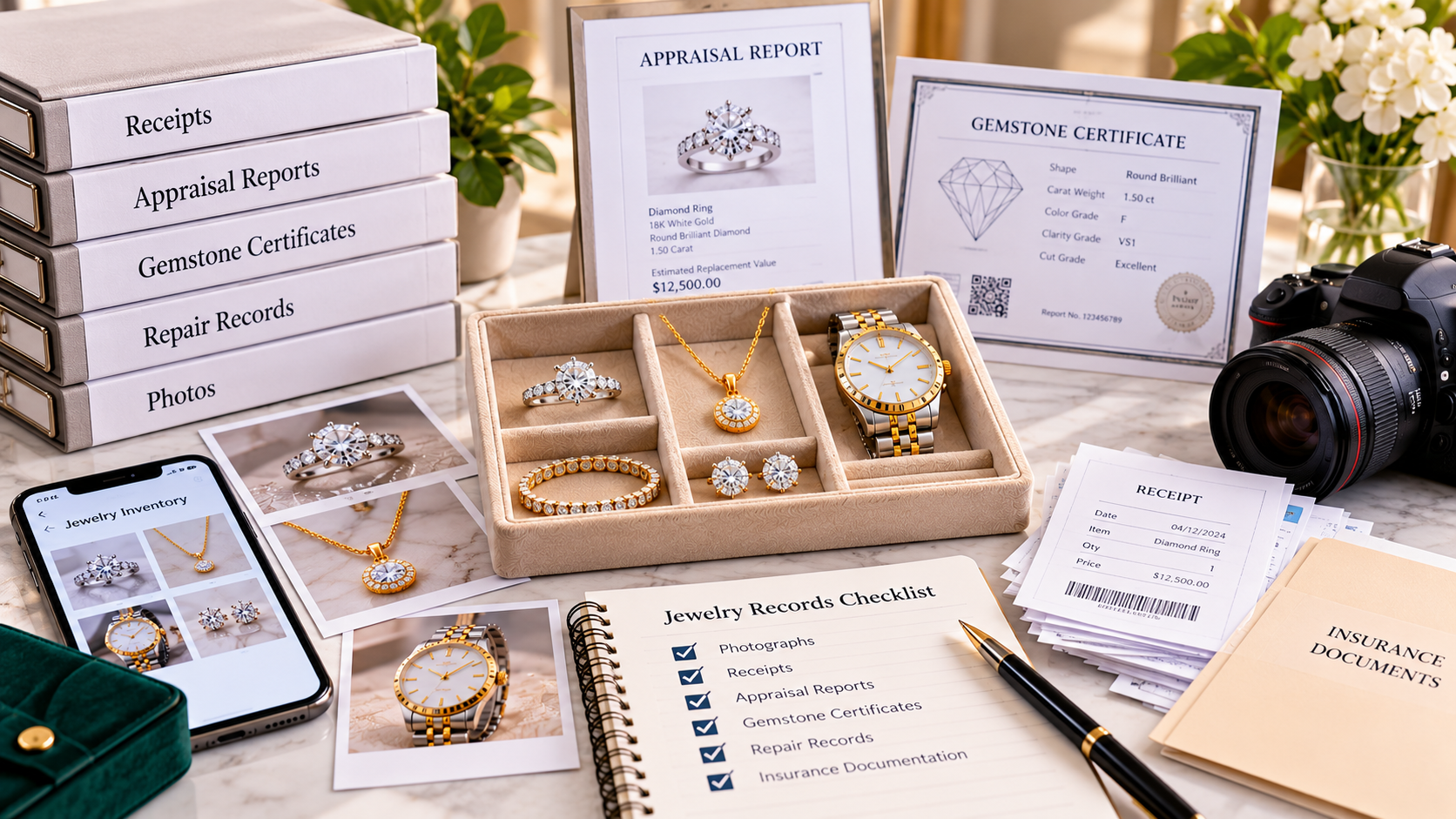
Jewelry documentation serves several purposes. It helps identify individual pieces, retain evidence of ownership, and locate relevant information when an insurance provider requests supporting records.
When you own several similar rings, bracelets, or pairs of earrings, identifying an individual item from memory can be difficult. Photographs, written descriptions, and unique inventory numbers help distinguish one piece from another.
Purchase receipts, gemstone reports, repair invoices, and appraisal documents provide different types of information. Organizing them together reduces the time spent searching for paperwork when you need it.
Jewelry may be repaired, resized, redesigned, or transferred between family members. Dated records help document these changes and preserve a clearer history of each item.
Depending on your policy and the type of coverage, your insurer may request photographs, proof of ownership, an appraisal, or other supporting documentation. Keeping these materials organized makes it easier to locate the requested information.
An inventory does not guarantee insurance coverage or replace the terms of your policy. Contact your insurance provider to determine which documents are required for your particular items.
The first step is to create a master jewelry inventory. A spreadsheet is usually sufficient for a small or medium-sized collection.
Assign every item a unique identification number, such as RING-001, NECKLACE-001, or WATCH-001. Use the same number in your spreadsheet, image filenames, and document folders.
For each piece, record the following information where available:
Do not guess missing details. Mark information as unknown or unverified until it can be confirmed.
| Inventory ID | Jewelry item | Supporting documents |
|---|---|---|
| RING-001 | Diamond ring | Receipt, photographs, appraisal |
| NECKLACE-001 | Gold necklace | Receipt, photographs |
| WATCH-001 | Luxury watch | Purchase invoice, service records |
These are illustrative examples. Your inventory should reflect the actual items and documents you possess.
Purchase receipts can help document when and where you acquired a piece of jewelry. Depending on the information provided, a receipt may include the seller, purchase date, item description, and original purchase price.
Keep original paper receipts where practical, and create digital copies before the text fades or the paper becomes damaged.
For online purchases, save the invoice or order confirmation as a PDF. Give the file a descriptive name that includes the corresponding inventory ID.
For example:
If you received a piece as a gift or inheritance, you may not have an original purchase receipt. Retain any available documentation that helps establish its history, such as gift records, estate distribution documents, previous appraisals, or relevant family records.
A receipt can support the item’s purchase history, but the original purchase price does not necessarily represent its current replacement value.
Photographs provide a visual record that complements your written inventory.
Take clear photographs of each piece against a simple background with even lighting. Capture the overall design and distinctive details that help identify the item.
For rings, photograph the top, sides, setting, and visible hallmarks. For necklaces and bracelets, include the full piece and its clasp. For watches, photograph the dial, case, and other identifying features.
Use filenames that match your inventory numbers, such as:
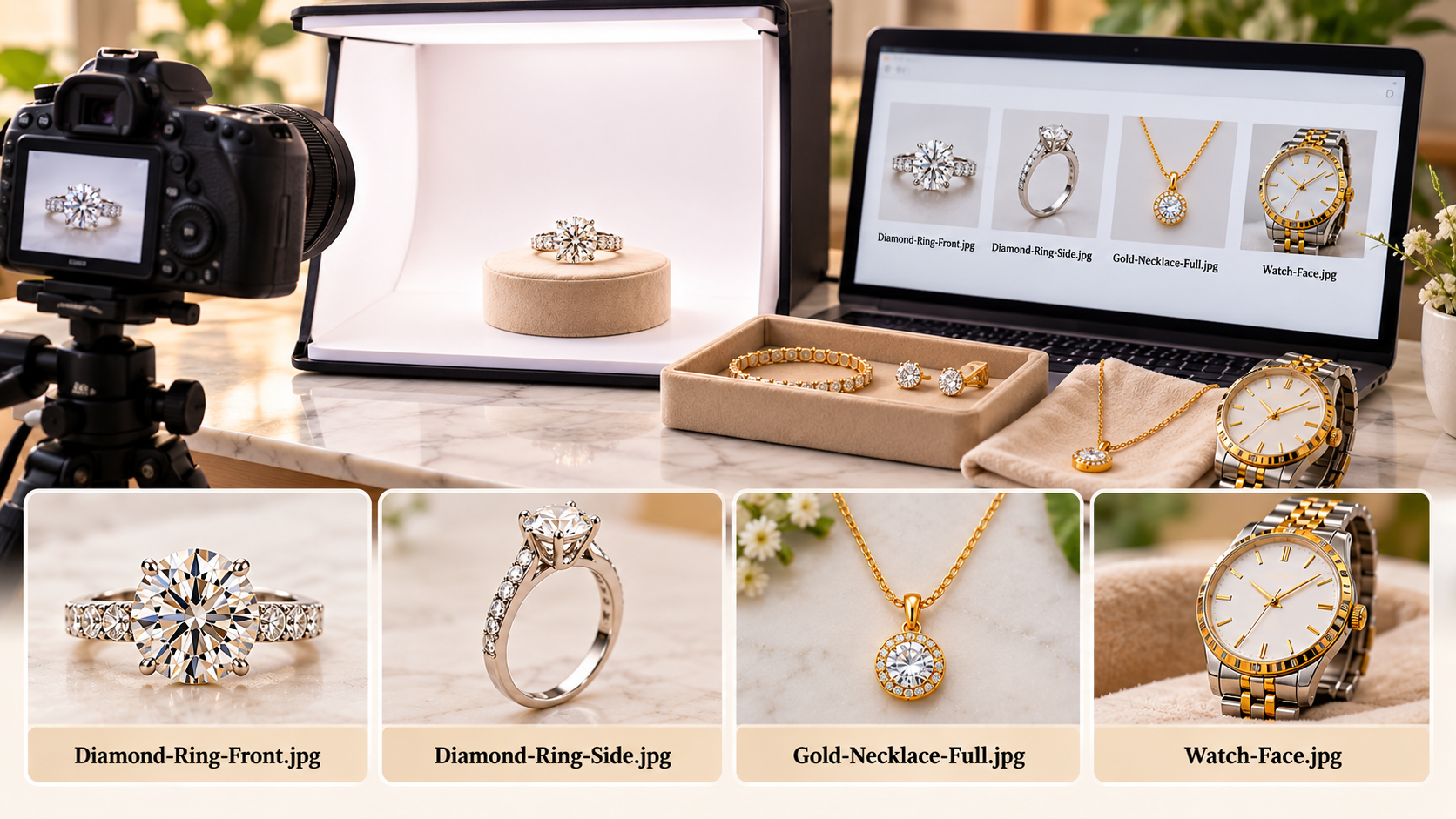
Keep original photographs where possible, and avoid editing them in ways that misrepresent the item’s appearance.
Photographs can help identify jewelry, but they cannot independently verify every gemstone, metal characteristic, or monetary value. A professional examination may be necessary when those details need to be established.
If you have a professional jewelry appraisal report, store it in the folder associated with the relevant item. Record the report date so you can distinguish it from older documents.
You may also have diamond grading reports, gemstone laboratory documents, or manufacturer records. Keep these documents with the matching inventory entry and note the issuing organization and report reference when available.
An appraisal and a gemstone grading report serve different purposes. Neither should automatically be treated as a substitute for every document an insurer may request.
For more information, read our guide to professional jewelry appraisal reports and the documents they include.
Repairs and alterations can change a piece’s appearance or physical characteristics. Keep invoices and service records for work such as ring resizing, stone replacement, clasp repairs, or restoration.
For each significant service, record:
For example, if a gemstone is replaced, update the inventory and retain the repair documentation. Do not assume an older photograph or report describes the item’s current condition after a significant change.
This process helps preserve a more complete history of your jewelry collection.
Once you have gathered your documents, create a consistent digital filing system.
A simple folder structure might look like this:
Jewelry Inventory
Use descriptive filenames and consistent dates. For example, RING-001_Appraisal_2026-10-10.pdf makes the item and document date easy to recognize.
Keep the master spreadsheet separate if you prefer, provided it identifies the correct folders or document locations.
For a larger collection, inventory software may be useful. However, a spreadsheet and organized folders are often enough to establish a practical recordkeeping process.
Your inventory may contain sensitive information about valuable possessions, purchase prices, and ownership. Keep it in a secure location and limit access to people who need the information.
Consider maintaining a backup in a separate secure location, such as a protected cloud account or encrypted storage device.
Use strong account security, review sharing permissions, and avoid posting detailed inventory photographs publicly. Do not include unnecessary personal information in filenames or shared documents.
Keep physical paperwork in a dry, secure place. Store original documents separately from the jewelry when practical, so the loss or damage of one does not automatically affect the other.
Periodically check that your digital files open correctly and that your backup remains accessible.
A jewelry inventory is most useful when it reflects your current collection.
Update your records when you:
Review the inventory periodically to check that photographs, receipts, and reports remain correctly linked to each item.
There is no single review schedule that applies to every collection. Follow your insurer’s requirements for appraisal updates and documentation, and consider whether changes to the jewelry or its intended coverage warrant further review.
Even a detailed inventory can become unreliable if information is incomplete or files are difficult to match.
Using vague filenames: Names such as scan001.pdf make it difficult to identify the relevant item. Use inventory IDs and descriptive filenames instead.
Keeping documents without linking them to individual items: A folder of receipts and reports is less useful if you cannot determine which piece each document describes.
Relying only on receipts: Receipts may establish purchase history but do not necessarily document current condition or replacement value.
Failing to update records after repairs: Keep service invoices and new photographs when changes affect the item’s appearance or characteristics.
Confusing purchase price with insurance value: These amounts may differ. Follow your insurer’s requirements for any valuation or supporting documentation.
Keeping only one copy: A secure backup can help protect your records from accidental deletion, device failure, or physical damage.
Organizing your records helps you maintain information about your jewelry, but a personal inventory does not independently establish the item’s full characteristics or monetary value.
You may need a professional appraisal when an insurer requests a valuation, when existing documentation needs to be reviewed, or when you need a documented assessment of a valuable piece.
The appropriate valuation depends on the intended purpose of the appraisal. Confirm the requirements with your insurance provider before arranging the service.
Associated Gemological Services provides independent jewelry appraisal services in Honolulu, with mobile appointments available across Oahu. Its appraisal services include detailed item descriptions, digital photographs, metal testing, gemstone examination, and researched valuation as appropriate to the assignment.
Learn more about professional jewelry appraisal services in Hawaii.
Keep available purchase receipts, photographs, written item descriptions, professional appraisal reports, gemstone documentation, and repair invoices. Your insurer can tell you which documents are required for your policy.
Create a master spreadsheet with a unique ID for each item. Store its photographs, receipts, appraisal reports, and other supporting documents in a matching folder, and use descriptive filenames.
Photographs can help identify an item, but they do not replace a professional valuation when one is required. Ask your insurer what documentation is appropriate for your coverage.
Record the information you know and retain any alternative documentation available, such as previous appraisal reports, photographs, order confirmations, or relevant ownership records. Ask your insurer whether additional documentation is needed.
Update the inventory whenever you acquire, sell, transfer, repair, or materially alter an item. Review it periodically and follow your insurer’s requirements for appraisal updates.
Maintaining both can be useful. Keep physical originals securely stored where available, and retain protected digital copies so you can retrieve the information when needed.
Organizing jewelry records for insurance purposes begins with a simple process: assign a unique ID to every item, collect available supporting documents, photograph each piece, and store the records in a consistent and secure system.
Regular updates help ensure your inventory reflects changes to your collection and makes the right documents easier to find when needed. Although personal records cannot replace a professional valuation or guarantee insurance coverage, they provide a useful foundation for managing jewelry documentation.
If you need a professional assessment of a valuable piece, an independent jewelry appraisal can complement your recordkeeping system. Keeping personal records and appropriate professional documentation organized helps you maintain a clearer history of your collection.


