
A professional jewelry appraisal report is a structured document prepared by a qualified appraiser that verifies the identity, quality, and value of a jewelry item. Whether you are insuring heirloom pieces, preparing for resale, estate planning, or confirming authenticity, understanding what’s included in a professional appraisal helps you evaluate its reliability and usefulness.
This guide explains the key documents and components typically included in a professional jewelry appraisal report so you know what to expect from a credible evaluation. 💎
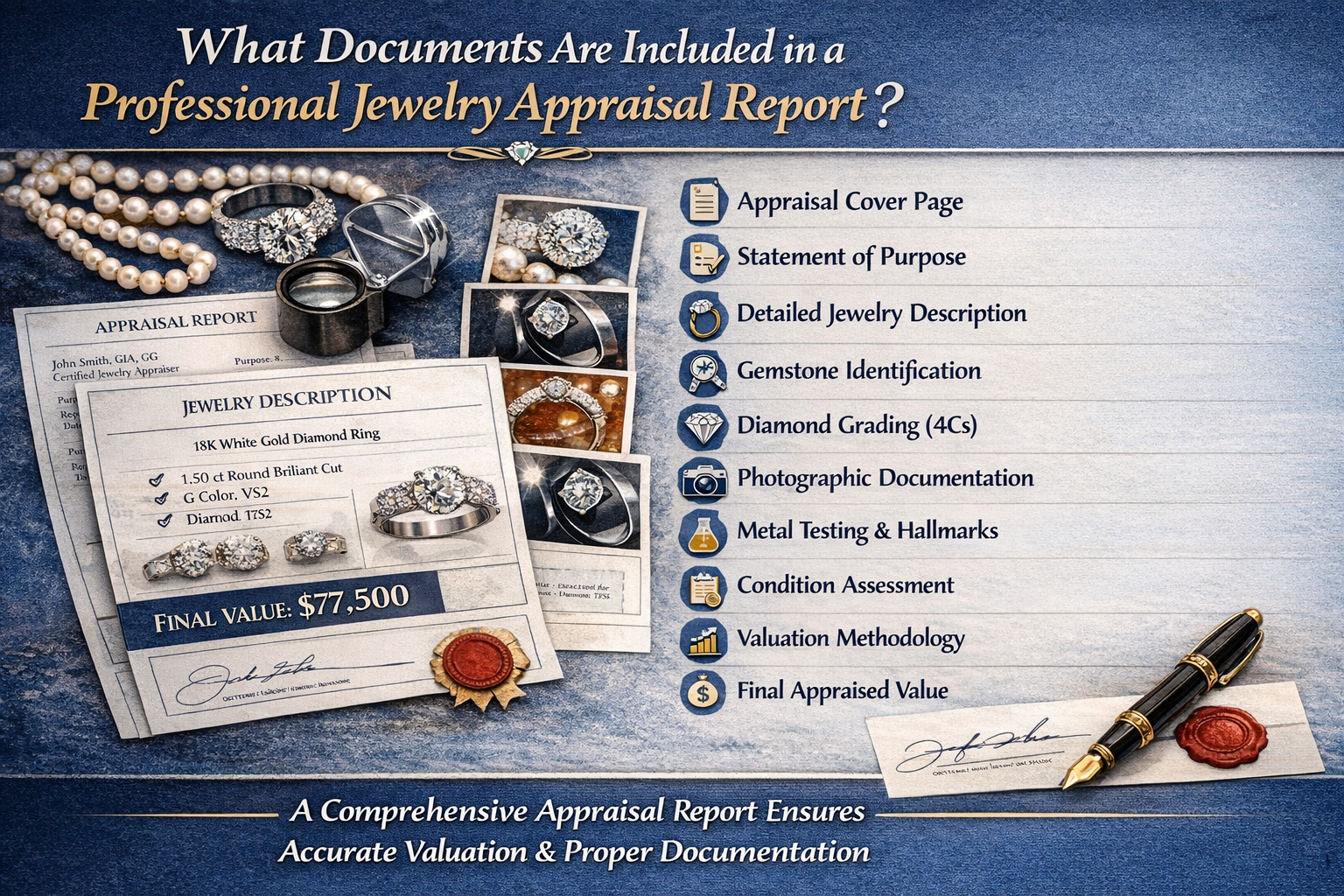
Before reviewing the documents themselves, it’s important to understand the purpose of an appraisal report. A professionally prepared report:
A complete report is not just a price estimate—it’s a technical evaluation supported by documentation.
The cover page serves as the formal introduction to the report and typically includes:
This page confirms the report’s legitimacy and ensures traceability.
Professional reports clearly define why the appraisal was conducted, because valuation changes depending on purpose.
Common appraisal purposes include:
Each valuation type follows different standards and pricing logic.
This is one of the most important sections of the report. It documents the jewelry piece in technical detail.
Typical description elements include:
Accurate descriptions help prevent substitution fraud and misidentification.
If the jewelry contains gemstones, the report will include detailed gemological observations.
These may include:
For diamonds especially, professional grading follows recognized evaluation standards.
For diamond jewelry, grading typically follows the 4Cs framework:
Additional diamond-specific documentation may include:
These factors significantly influence value and insurance replacement cost.
A professional appraisal report always includes high-quality photographs of the jewelry item.
These images serve several purposes:
Photographs usually show:
Jewelry appraisers often document:
They may also include results from testing methods such as:
This confirms the authenticity of the metal composition.
Condition directly affects jewelry value. A professional report includes an evaluation of:
Condition notes are especially important for estate jewelry and antique pieces.
Similar link: The Impact of Market Trends on Jewelry Appraisals
Precise measurement improves accuracy and prevents disputes.
Typical recorded measurements include:
These technical details support valuation transparency.
10. Market Research and Valuation Methodology 📊
A reliable appraisal report explains how the value was calculated, not just the final number.
Transparent valuation methods increase credibility.
This section presents the official conclusion of the appraisal.
It includes:
A trustworthy jewelry appraisal report includes the appraiser’s professional qualifications.
Common credential references may include:
Credentials confirm that the report meets accepted appraisal standards.
Professional reports usually include a disclaimer section explaining:
These statements protect both the client and the appraiser legally.
Read More: Why Every Jewelry Purchase Should Be Accompanied by an Appraisal
The report concludes with:
This confirms the document’s authenticity and professional acceptance.
Before accepting a report, verify that it includes:
✔ Detailed item description
✔ Gemstone grading information
✔ Clear photographs
✔ Purpose of appraisal
✔ Valuation methodology
✔ Appraiser credentials
✔ Signature and date
A complete report ensures your jewelry is properly documented for insurance, resale, or estate planning purposes.
Final Thoughts
A professional jewelry appraisal report is far more than a price estimate—it’s a technical identification record, valuation analysis, and ownership safeguard combined into one document. Whether you’re protecting a family heirloom or preparing jewelry for resale, understanding what should be included helps you choose a qualified appraiser and obtain a reliable valuation.


